
Shio Kombu, Explained: the Salted Kelp in Our Lamb Tartare

Our Hamilton Road menu prints two words on the lamb tartare that most people read straight past. Under Small Plates the line is: KIBBEH NAYYEH — margra lamb tartare, shio kombu, wheat, wasabi ponzu vinaigrette, crispy things, salted cambodian black pepper. Shio kombu is the one ingredient in that list that almost nobody outside Japan cooks with at home, so this is the post that explains it: what it is, how it is made, where it came from, and why a Levantine raw-lamb dish ended up with Japanese kelp in it.
The short answer: shio kombu is kelp that has been cut small, simmered in salt or soy, and then either boiled down until salt blooms on its surface or tossed in salt afterwards. It is a seasoning you can eat straight from the packet, and it does two jobs at once — salt and a deep savoury note.
First, the kombu
Kombu (also romanised konbu — both spellings are correct, and our own two menus use one each) is edible kelp, mostly from the family Laminariaceae. There are around eighteen edible species in that family and most of them are sold as some kind of kombu: ma-kombu, rishiri-kombu for soup stock, mitsuishi-kombu for dashi, and so on. Japan eats more of it than anyone, and has for a very long time — a court chronicle from 797 records people in the north sending kombu to the Yamato court as annual tribute.
Kombu matters to Japanese cooking for one reason above all: glutamate. In 1908 the chemist Kikunae Ikeda worked out that the savoury quality of kombu dashi came from glutamic acid, and named the taste umami. We have told that story, and the more interesting one about what happens when kombu meets bonito or meat, in our post on umami. Shio kombu is what happens when you take that glutamate-rich kelp and turn it into something you can sprinkle.
How shio kombu is made
The Japanese-language reference account of shio kombu describes the method simply. Kombu is cut into small squares or thin strips, then simmered with salt or soy sauce — sometimes with sugar or mirin for roundness. From there it goes one of two ways:
- Boiled down until the salt blooms. The kelp is cooked until the liquid is gone and salt, along with glutamate, rises to the surface as a fine white dust. This is the shio-fuki (“salt-blown”) style, and it is the one most people picture: dark, dry-ish strips with a frosting of white.
- Cooked, then coated. The simmered kelp is tossed in salt after cooking rather than reduced until it blooms.
It also comes in two textures. A soft type is eaten as it is. A hard type is meant to be softened in hot water — poured over rice as ochazuke, or dropped into a simmered dish. Some makers add a splash of vinegar at the start, which softens the kelp as it cooks, and the salt itself is part of why shio kombu keeps well.
Where it came from: Osaka and a salt-blown invention
Kombu grows in the cold north, around Hokkaido. It became an everyday food in western Japan because of shipping: from the Kamakura period onwards, trade routes carried it down the Sea of Japan coast and on to Osaka, which became the country’s great kombu-processing town. Simmering kelp in a fermented seasoning is older still — the reference account traces it to the Heian period.
Shio kombu as a shop product is Osaka’s. In the Meiji era a kombu dealer there, Kansou, began selling over the counter the shio kombu it had been making for its own use, and took it to the national industrial exhibitions held at Ueno and at Tennoji, where it won prizes and the name spread across Japan. That early version was wet — closer to kombu tsukudani, the soy-simmered preserve.
The dry, salt-blown kind came later. Japanese Wikipedia credits Yamamoto Risuke with inventing it in 1949. The company that carries that name, Ogura-ya Yamamoto — founded in 1848 by the first Yamamoto Risuke beside Shinmachi-bashi in Osaka — dates the launch of its salt kombu Ebisume to 1949 in its own published history, notes that a magazine of the time called it “too delicious” kombu, and records a Minister of Agriculture and Forestry award in 1954. The company’s own page does not use the word “invented”, so we are giving you both accounts rather than choosing one. Factory-scale shio kombu followed in the 1960s, when Fujicco brought a mass-produced version to market.
Why it tastes the way it does
Two things are happening in a pinch of shio kombu. The first is glutamate from the kelp. The second is salt, and salt does more than add salinity: the Japanese account describes it as a contrast effect that makes the savoury note stand out more sharply than it would on its own. When soy sauce is used in the simmer, it brings its own glutamate, sweetness and acidity with it.
The third thing only happens on the plate. Glutamate on its own is one half of umami; put it next to something rich in inosinate — meat, or bonito — and the two amplify each other. That is the mechanism our umami post is built on, and it is the honest reason kelp on raw lamb makes sense rather than being a gimmick.
How Japan actually eats it
Mostly as a small, strong thing on the side. Shio kombu goes over rice, into rice balls, over ochazuke, into dressed vegetables and stir-fries, and into rice cooked with other ingredients. It is also served at Japanese sweet shops as a palate-cleanser beside anmitsu or sweet red-bean soup, where its saltiness makes the dessert taste sweeter. That last use is the one that tells you how to think about it: it is a seasoning with texture, not a vegetable.
A plain note for anyone eating a lot of it: kombu is very high in iodine, and shio kombu is, by design, salty. A tartare uses it in small quantities. We are not making any health claim either way; if you are watching your salt or iodine, tell us and we will talk you through the dish.
What it does in our kibbeh nayyeh
Kibbeh nayyeh is the Levantine raw-lamb dish, traditionally bound with bulgur and seasoned with onion, salt and spice. Our version keeps the wheat and swaps most of the rest for ingredients from the other side of the menu, and the shio kombu is the swap that does the most work: it brings the salinity and the savoury depth together. We have written up the whole plate — including the food-safety questions people reasonably ask about raw meat — in our kibbeh nayyeh post, and set it beside the charcoal-grilled lamb rump in Lamb Two Ways.
The acid on the same plate comes from a wasabi ponzu vinaigrette. If you want the other two Japanese ingredients explained properly, ponzu and wasabi each have their own post.
What the menu does not tell you, and so what we will not claim here: whether ours is the salt-blown style or the coated style, and whether it is made in our kitchen or bought in. The menu names the ingredient and nothing more. If you want to know, ask whoever is serving you — the kitchen can answer in one sentence.
And at Li’l Habibi, our kushiyaki counter at 55 Haji Lane, kelp turns up in a different form: the menu there prints konbu on its fries, and “Seaweed ‘We Shake For You’ Fries” among the smaller plates. That menu says konbu, not shio kombu, so we are not treating them as the same ingredient.
Where to taste ours
The kibbeh nayyeh is on the Small Plates section of the Habibi-san menu at 29 Hamilton Road, Jalan Besar, open Tuesday to Sunday, 5pm to 11pm. It is a lamb dish, but the restaurant serves pork and alcohol and is not halal — our FAQ covers that and dietary notes. For more of the Japanese pantry on our menus, start at our guide to Japanese food in Singapore, or read how we use XO sauce and harissa.
Book a table and order it with a cold glass of something — then taste the lamb once without the kelp in the bite, and once with it.
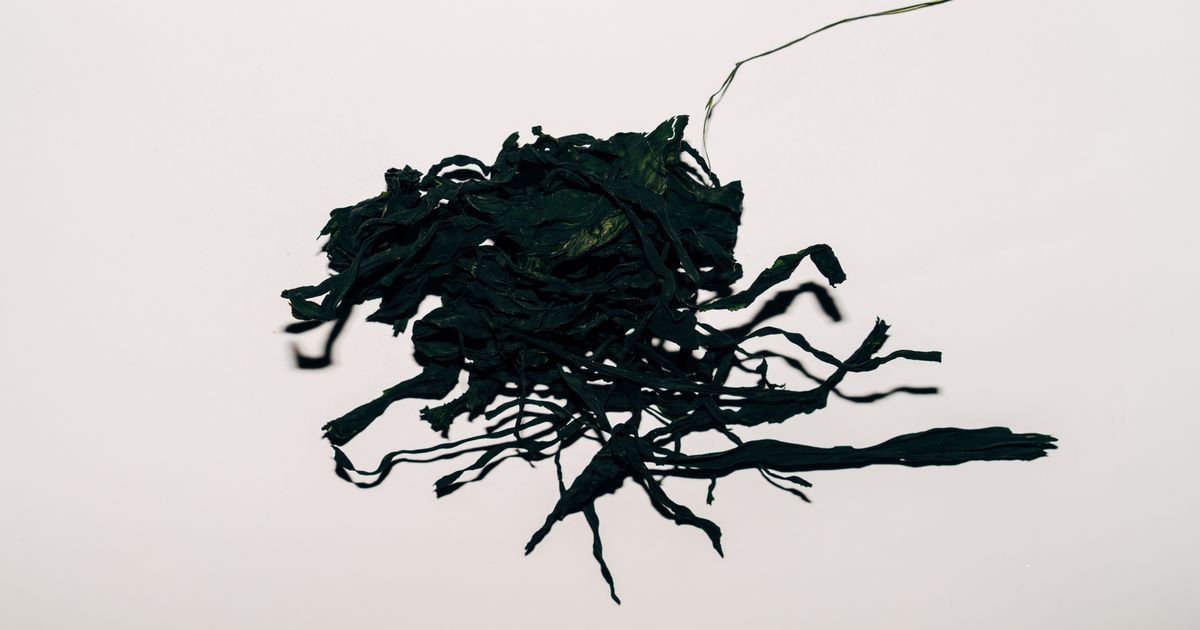
About the photo above: it is a stock photograph of dried seaweed, not our shio kombu and not our kitchen.
Sources: Habibi-san food menu (live PDF, re-read 30 September 2026); Japanese Wikipedia, “塩昆布” (shio kombu); English Wikipedia, “Kombu”; Ogura-ya Yamamoto company history page (ogurayayamamoto.co.jp). No quotation in this post is attributed to anyone.