
Is Raw Meat Safe at a Restaurant? Our Kibbeh Nayyeh, Honestly Explained
Raw lamb, straight answers: what kibbeh nayyeh is, what Margra lamb brings to a tartare, what a kitchen can promise about raw meat, and who should skip it.

There is one dish on our menu that people read twice, put a finger on, and then ask the table about instead of ordering. It is the kibbeh nayyeh — raw lamb — and the question underneath the hesitation is always the same one.
So here is the honest version, in the order the question actually gets asked: what the dish is, what is in ours, what a kitchen can and cannot promise you about raw meat, and who should skip it.
Kibbeh nayyeh is not a modern restaurant idea
Kibbeh nayyeh is Levantine, from Lebanon and Syria, and it long predates anybody’s food-safety framework. Finely worked raw meat, bulgur wheat, onion, mint and spices, pressed onto a platter, scored, flooded with olive oil, and eaten with flatbread, spring onion and green chilli.
Traditionally it belonged to feast days and Sundays, for a specific and rather practical reason: it was made from an animal butchered that morning. Freshness was the safety mechanism. There was no refrigeration in the arrangement and none was needed, because the gap between the animal and the plate was measured in hours.
It is also, and this matters for understanding why anyone bothers, a dish of hospitality. Serving raw meat to a guest is a way of proving the meat is good. You cannot hide anything in it. There is no browning, no sauce reduction, no long cook to rescue a mediocre piece of lamb. The dish is a claim about sourcing, made out loud.
Ours keeps the wheat and changes nearly everything else
The menu line is Margra lamb tartare, shio kombu, wheat, wasabi ponzu vinaigrette, crispy things, salted Cambodian black pepper.
The wheat is the survivor. Everything else has been swapped for something that does the same job from a different kitchen:
- Shio kombu in place of the onion and salt. Salt-cured kelp, chopped fine: it brings salinity and a deep savoury note at the same time, which is two of the original’s jobs in one ingredient.
- Wasabi ponzu vinaigrette in place of the lemon and olive oil. Ponzu is citrus and soy, so the acid is still there; the wasabi supplies a short, clean heat where the traditional dish uses green chilli on the side.
- Crispy things in place of nothing at all. Classic kibbeh nayyeh is soft throughout and relies on the bread for texture. We put the texture on the plate.
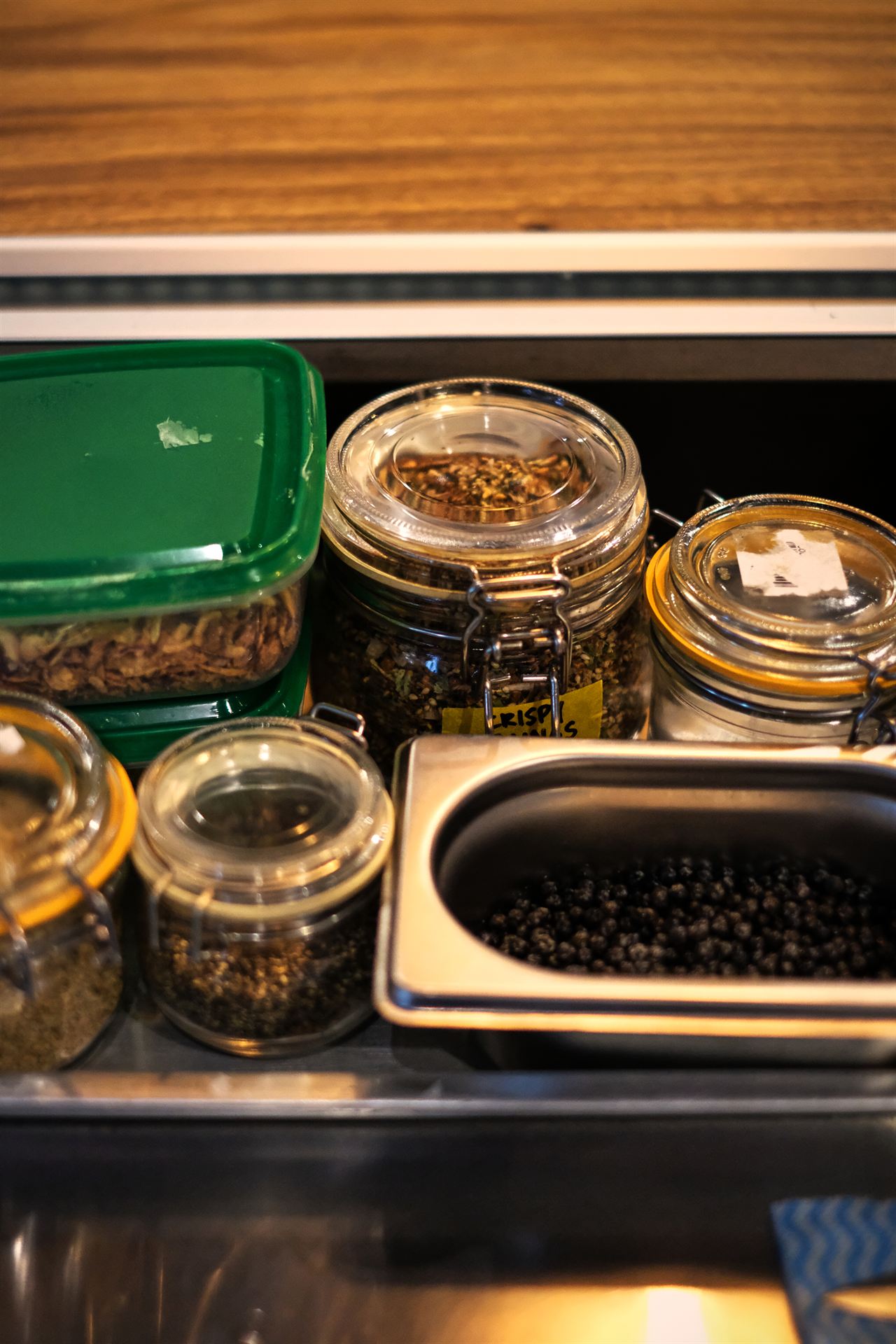
- Salted Cambodian black pepper, which needs no justification. Pepper on raw meat is the oldest move in the tartare repertoire. Cambodia’s pepper reputation rests largely on Kampot, and our menu says Cambodian, not Kampot, so we do not claim more than that. The pepper explainer sets out the difference. (Updated 8 October 2026.)
Read as a whole, it is the same dish making the same argument — here is lamb good enough to serve raw — in a Japanese accent.
What Margra lamb is
We name the brand on the menu, so it is fair to say what it is.
Margra is Australian. It comes from the Australian White sheep, a shedding breed that grows hair rather than wool, and it was developed over roughly three decades by two brothers, Martin and Graham Gilmore, near Oberon in New South Wales. The name is simply their two names run together: Martin and Graham.
The thing it is known for is its fat. The marbling is unusually fine and dispersed through the cut rather than sitting in seams, and the fat has a notably low melting point — chefs quoted by the producer describe it behaving in ways lamb fat does not normally behave.
For a tartare that is not a marketing detail, it is the deciding one. Lamb fat with a high melting point is the reason a lot of people think they dislike lamb: eaten cool, it goes waxy and coats the roof of the mouth, and the flavour that comes with that coating is the “muttony” note nobody is asking for. A fat that melts low does not do that. Raw or barely cool lamb lives or dies on exactly this.
Beyond naming the brand, we are not going to make claims about our supply chain in a blog post. What is on the menu is what we can stand behind.
So is raw meat safe?
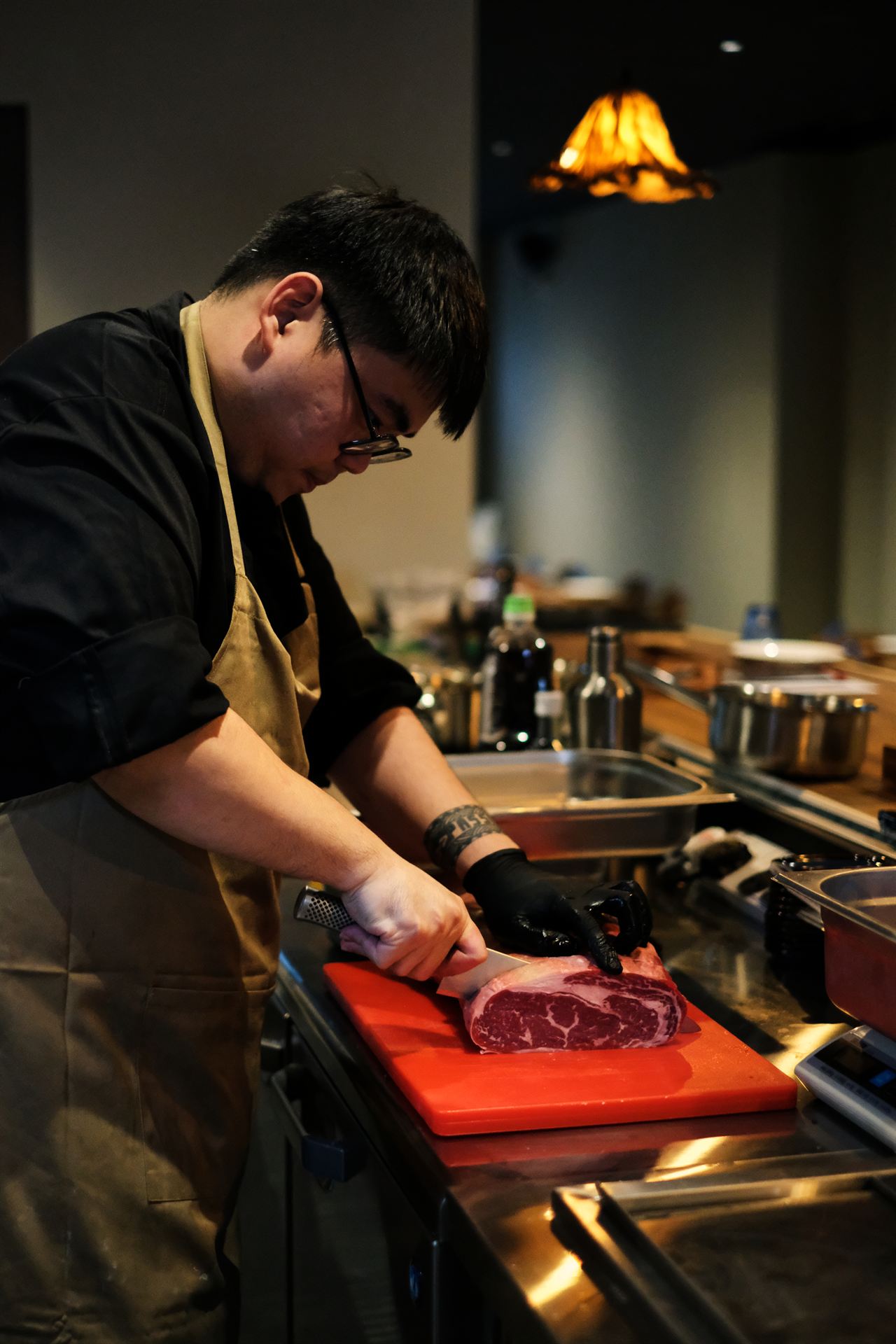
The straight answer, which no restaurant should dress up: raw meat carries a risk that cooking removes, and nobody can honestly tell you that risk is zero. Anyone who tells you otherwise is selling something. What a kitchen can do is make the risk small, and it is worth knowing what “small” is built out of, because it is not mysterious.
The single biggest factor is whole muscle versus mince. Bacteria live on surfaces. The inside of an intact muscle starts out essentially clean; the outside does not. When meat is ground, every surface is distributed evenly through the entire batch, which is exactly why pre-minced meat is the wrong starting point for anything raw and why the food-safety advice around burgers is so much stricter than the advice around steak. A tartare worth eating begins as a whole cut, trimmed, and is worked immediately before it goes out.
After that it is cold chain and separation, which are as boring as they sound: raw protein kept properly cold, handled on its own board with its own knife, never sharing a surface with anything that is going out uncooked, and not sitting made-up waiting for an order.
That is the standard the dish has to meet. If you want to know how a particular plate was handled on the night you are sitting there, ask the floor and they will ask the kitchen. We would much rather answer that than have you guess, and it is a question we get often enough that nobody will be surprised by it.
Who should not order it
This part is not restaurant-specific and it is not up for negotiation, so we will just say it. General public-health advice is that raw and undercooked meat should be avoided by:
- anyone pregnant
- infants and young children
- older adults
- anyone whose immune system is compromised — through chemotherapy, a transplant, certain medications, liver disease and so on
If that is you, this is a dish to admire on somebody else’s side of the table. It costs you very little: the two most-ordered things we make are the Brussel sprouts and the Mangalica pork collar, and neither one involves raw anything.
Tell us before you order, not after
The bottom of our food menu carries one line, and it is there for exactly this reason: please let us know if you have any dietary restrictions or food allergies. Our Haji Lane sibling puts it slightly more bluntly — tell us in advance, and substitutions may be politely declined.
Both mean the same thing. A kitchen can plan around almost anything if it knows at the start of service. Halfway through a plate is a much worse moment to find out. More of these questions are answered in our FAQ, including the ones about pork and alcohol.
How to eat it
Order it early and eat it first. It is a small plate, it arrives cold, and it is at its best in the first few minutes; a tartare that has sat out while you finished something else has lost the thing that made it worth ordering.
Put it against something with structure. Pita, obviously. The babaganoush works well next to it because smoke and raw lamb are a genuinely old pairing wearing new clothes, and if you want the whole spread rather than a single decision, what reviewers keep ordering will get you there faster than the menu will.
The full list is on the menu, the kitchen it comes out of is in the gallery, and how a Levantine dish ended up with kombu in it is the long story told in five years of Habibi-san.
We are at 29 Hamilton Road, Singapore 209198, Tuesday to Sunday from 5pm. Book a table.